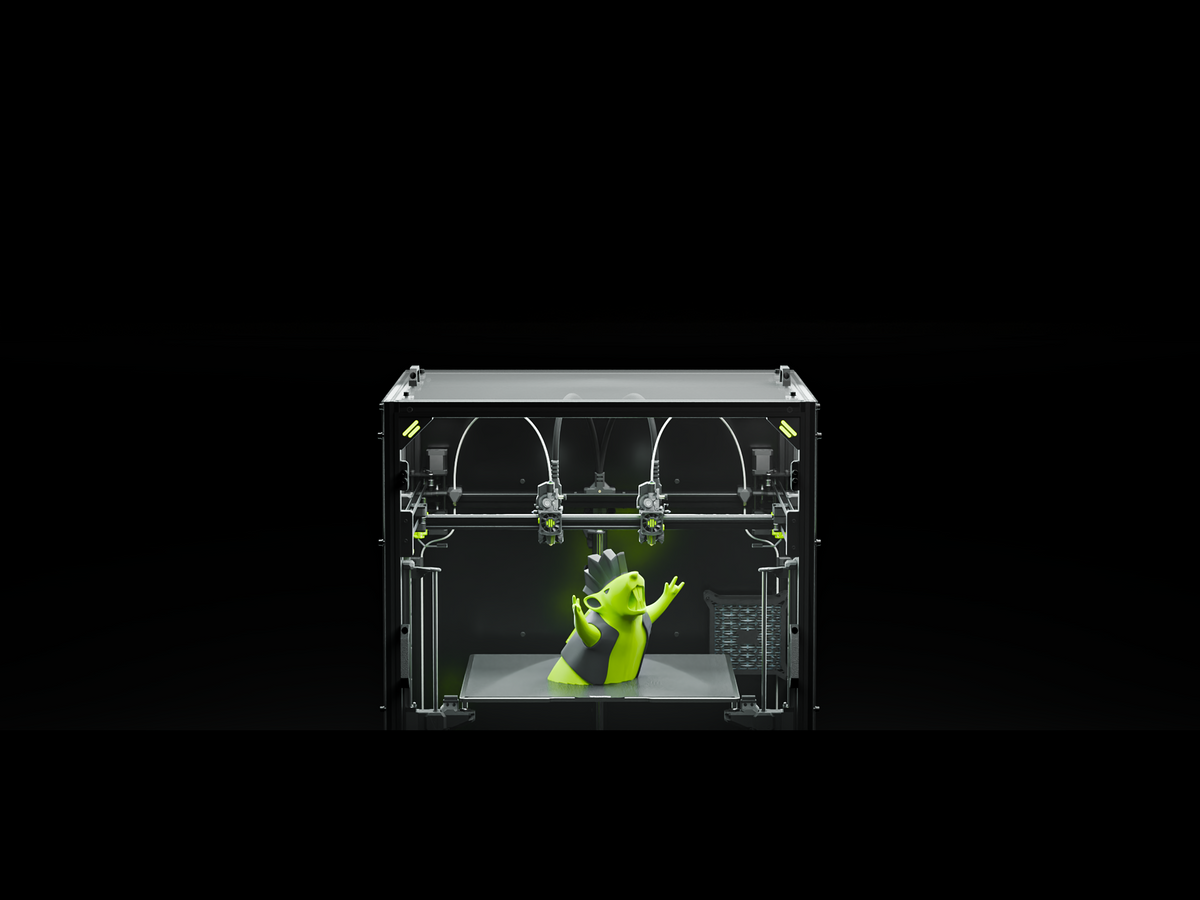
Z calibration, getting the nozzle to the exact right distance from the bed before a print starts, used to be the kind of task you'd dread repeating. Babystepping, paper under the nozzle, redoing it every time you swapped a plate or a nozzle. The V-Core 4.1 ships with the Beacon probe by default specifically to make that problem go away.
A touch light enough to use on anything
Beacon Contact finds true zero with a single, light touch of the nozzle on the print surface, around 20 grams of force, roughly 50 times lighter than older touch based methods. It's gentle enough that you can use the nozzle itself to mesh the entire bed, which matters if you're printing on a surface that isn't metallic and wouldn't work with an inductive probe.

One click, and RatOS does the rest
The raw hardware is only half the story, it's the integration with RatOS that makes this feel closer to automatic than manual. A single command calibrates the Beacon, runs a quality check on the probe to confirm the results are stable, and compensates for hotend thermal expansion across the full temperature range up to operating temperature. If that command fails, it's actually useful information, it usually means something in the assembly needs attention rather than the probe being at fault.
In practice, that means swapping a nozzle or a build plate stops being a chore: swap the part, run the calibration, and you're printing. RatOS 2.1 pushed this further still with an improved compensation mesh and multi point true zero measurement, which we cover in RatOS 2.1: Smarter First Layers, Explained.
It scales to two toolheads too
On a single toolhead machine, Beacon handles Z on its own. On a V-Core 4.1 running IDEX, it's paired with VAOC for the X and Y offset between the two nozzles and a precision mechanical endstop for the height difference between them, so the same philosophy, calibration that runs itself at the start of a print, carries over to a much harder problem.
Your rig, your rules.